
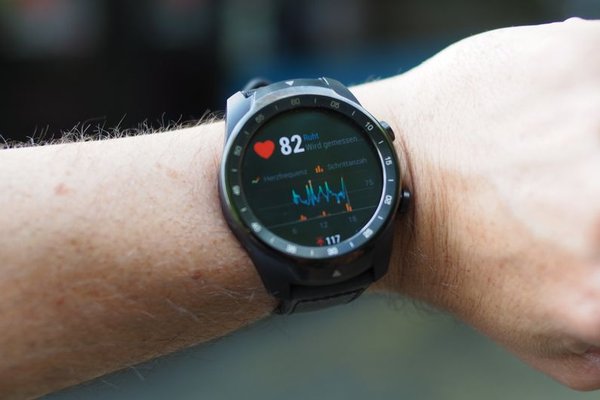
Your fitness tracker says you walked 8,200 steps and burned 540 calories. Does that mean both numbers are equally trustworthy? Not quite. Fitness tracker accuracy depends on what the device measures. Steps are often reasonably dependable during ordinary walking, while calories burned are estimates built from several assumptions.
The question is which readings can guide everyday decisions, which deserve caution, and how to recognize when your tracker is getting confused.
What Does a Fitness Tracker Actually Measure?
Most fitness tracker sensors detect movement through accelerometers and gyroscopes. Optical sensors estimate heart rate by detecting changes in blood flow at the wrist. Some devices use GPS to measure outdoor routes.
Software turns those signals into step counts, distance, activity minutes and calorie estimates. A tracker detects movement and pulse signals; it does not directly measure the energy your body uses. Each additional calculation introduces more potential error.
How Accurate Are Fitness Trackers for Steps?
Step counter accuracy is usually strongest when you walk steadily with your arms moving normally. Reviews of wearable-device studies generally find step counting more reliable than calorie estimation, although results vary by device, activity and user.
Wrist trackers look for movement patterns associated with walking. That works well until your arms stop moving naturally. Pushing a shopping trolley or pram, holding treadmill rails, or carrying boxes can cause missed steps. Repetitive hand movements while sitting may occasionally add steps you never took.
Slow walking, shuffling and uneven gait patterns also make detection harder. A small difference during a short walk may be unimportant, but repeated undercounting can distort your daily activity goal.
Step totals are best used to compare similar days, not treated as perfect records of every footfall. If your usual weekday is around 5,000 steps and you gradually reach 7,000, the trend remains useful even if exact totals are imperfect.
Why Calorie Tracker Accuracy Is Less Reliable
A wrist device cannot directly measure calorie burn. It combines movement, heart rate, profile details and formulas to estimate energy expenditure. Two people doing the same workout can burn different amounts of energy; two trackers can produce different estimates for the same person.
Research reviews consistently identify energy expenditure as one of the weakest measurements from consumer wearables. Errors occur in either direction, so there is no universal percentage you can subtract to make the reading correct.
Distinguish active calories from total calories. Active calories generally refer to energy used above resting needs; total calories may include the energy your body uses at rest. Confusing them can make a workout look more demanding than it was.
Suppose a watch reports 400 active calories after a gym session. That is not proof you can eat an additional 400 calories without changing your energy balance. Use the reading as a rough comparison between similar workouts, not an exact food budget.
Are Distance and Heart Rate Readings More Trustworthy?
Distance depends on the method
A tracker with a clear GPS signal can often estimate an outdoor route more reliably than a device calculating distance from steps and assumed stride length. GPS can struggle among tall buildings, under dense trees or when reception is interrupted.
Without GPS, the device may multiply steps by estimated stride length. Your stride changes when climbing hills, walking quickly or becoming tired, so distance can drift even if steps look reasonable. Accurate height settings and stride calibration, where offered, may help.
Heart rate is useful, with limitations
Optical wrist sensors can provide helpful readings at rest and during steady exercise. Rapid changes during intervals, vigorous arm movement, loose straps and poor skin contact may reduce accuracy. Tattoos and other factors affecting the optical signal can matter too.
For precise heart-rate zones during structured training, a compatible chest strap is often a better reference. Consumer wearables are not diagnostic devices for evaluating unusual symptoms.
What Makes Activity Tracker Accuracy Change?
Fit matters. A loose watch slides around, disrupting optical readings. Wearing it as the manufacturer recommends, with the sensor in steady contact with your skin, improves consistency.
Check your age, height, weight, dominant wrist and other profile details. Algorithms may use them for stride and calorie estimates, although correct settings cannot eliminate uncertainty.
Activity type also matters. Walking, cycling, weightlifting and rowing create different wrist movements. Choose the appropriate workout mode where available, update device software, and remember that step counts do not capture every form of exercise.
A Simple Test You Can Do Yourself
Try a real-world check rather than comparing your tracker with somebody else’s. Note your step total, then manually count 200 steps while walking normally on level ground. Compare the displayed increase with your count.
Repeat while carrying a bag or keeping one hand on a pram handle. If the second result differs noticeably, you have identified a situation in which your tracker undercounts. This does not establish accuracy across an entire day, but it reveals a practical limitation.
For distance, compare a familiar outdoor route with a measured course or reliable map. For calories, do not try to validate a single workout against food intake or scale changes; those involve many other factors.
How to Use Tracker Data Without Overtrusting It
Look for trends across weeks. Compare steps on similar workdays, notice whether walking time increases, and treat workout heart-rate patterns as context. If one calorie estimate looks surprising, give it less weight than longer-term habits.
To understand the technology, explore how fitness trackers work. For a practical routine, consider daily step goals; for structured workouts, understanding heart rate zones gives more context than a calorie total.
Frequently Asked Questions
Do fitness trackers count steps when you are not walking?
Sometimes. Repeated wrist movements can resemble walking patterns. Modern algorithms filter many false movements, but they are not perfect.
Can a fitness tracker accurately calculate calories burned?
It provides an estimate rather than direct measurement. Calorie tracker accuracy varies with the device, workout and individual, so avoid treating the displayed figure as exact.
Is a phone or wrist tracker better for counting steps?
Neither is always better. A phone can count well when carried consistently but misses movement when left on a desk. Wrist trackers stay with you, although arm movements may affect readings.
Should I trust my tracker more than a treadmill?
It depends on the measurement. A calibrated treadmill may provide useful belt-distance information, while a tracker estimates movement and pulse. Neither directly measures your calorie burn during a normal workout.
The Bottom Line
Fitness tracker accuracy is not one score. Step counts during typical walking and steady heart-rate readings can guide your habits; distance depends on the measurement method; calorie burn is substantially more uncertain. Treat your wearable as a trend tracker, check its settings and recognize situations that confuse it. Its value comes from seeing habits more clearly, not believing every number is exact.