
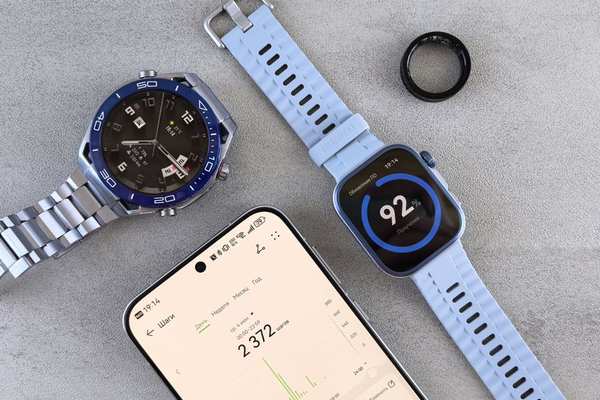
A fitness tracker no longer has to look like a miniature phone on your wrist. Smart rings offer sleep, movement, and recovery insights without a glowing display. That sounds appealing until you need to check your heart rate halfway through a run. In a smart ring vs fitness tracker comparison, the deciding factor is not which device looks more advanced. It is which one you will wear consistently, and when you need to see its information.
Quick verdict: two formats, different priorities
A smart ring is generally best for discreet, around-the-clock monitoring, particularly sleep and recovery trends you review later in a phone app. A wrist fitness tracker is generally better for workout feedback, glanceable statistics, and features such as exercise timers or GPS on supported models.
Neither format is automatically more accurate. Sensor quality, software, fit, and the measurement matter more than placement.
Comfort and fit throughout the day
A ring slips under a shirt cuff and can resemble ordinary jewellery. People who dislike sleeping with a strap may barely notice it. But fingers swell with heat and activity, and a ring that feels comfortable in the morning may tighten later. Sizing kits are especially valuable because a smart ring must maintain sensor contact without pinching.
A fitness band has an adjustable strap, making it easier to loosen after exercise. The trade-off is a larger surface against your skin, which may feel sweaty during workouts or awkward against a pillow. Your preferred wearable form factor depends on daily habits, not appearance alone.
Try wearing an ordinary ring of similar thickness while carrying shopping bags or gripping gym equipment. If it bothers you, think carefully before buying. Some manufacturers recommend removing smart rings for activities involving heavy weights or friction.
Sleep tracking: the advantage of forgetting your device
Smart rings are attractive for nighttime monitoring because they lack screens and wrist straps. Depending on the model, they measure movement, overnight heart rate, temperature trends, and other signals to estimate sleep and recovery. A comfortable ring may be easier to keep on every night.
Fitness bands can also estimate sleep duration, stages, resting heart rate, and related trends. Neither format substitutes for a clinical sleep study, and reported sleep stages are estimates rather than precise measurements. Look for patterns across several weeks instead of worrying about one poor sleep score. Understanding sleep tracking accuracy can help put those numbers in perspective.
Exercise tracking: where wrist devices pull ahead
The ring tracker vs wrist tracker difference becomes most obvious during a workout. A band with a screen can display heart rate, elapsed time, and exercise progress without reaching for your phone. Some models offer built-in GPS for outdoor routes; others depend on your phone. Check the exact specifications before buying.
Many smart rings count steps and automatically recognise certain activities. Some record workout heart rate, but a screen-free ring cannot provide instant visual feedback. Most lack built-in GPS, so runners who want route maps or live pace need to understand the model’s phone dependence.
Are finger sensors better for heart rate?
Not necessarily. Both designs often use optical sensors that estimate pulse from changes in reflected light. Movement, temperature, positioning, and contact can affect results. A loose ring or shifting wristband may lose a reliable signal, especially during intense exercise. For demanding heart-rate training, a compatible chest strap can be a useful reference.
Consider someone who runs three mornings a week and lifts weights twice. A wrist tracker with live metrics and suitable GPS is likely the more useful primary device. A ring may provide useful nighttime trends but could be uncomfortable gripping a barbell. Learning how wearable heart-rate sensors work explains why these compromises matter.
Screens, notifications, and the attention trade-off
A ring’s missing screen can be a benefit rather than a limitation. It collects information without asking you to check another display. The catch is that detailed results usually require opening an app on your phone.
A fitness band may show calls, messages, reminders, workout statistics, and timers, depending on the model. That convenience can motivate movement or create another stream of interruptions. If you want screen-free wearables to reduce distractions, consider whether you would actually disable those alerts on a band.
Battery life and charging routines
Do not assume rings always last longer. Oura reports roughly five to eight days for Ring 4 and six to nine days for Ring 5, while Google lists up to seven days for Fitbit Charge 6. These are manufacturer estimates under particular conditions, not promises.
GPS, always-on screens, blood-oxygen monitoring, settings, and battery age can shorten runtime. Think about when you can charge without losing the measurements you care about. A brief charge while getting ready may be more convenient than a larger advertised battery figure. Wearable battery-saving tips are also worth reviewing before deciding a device has poor endurance.
What ownership really costs
Compare more than the purchase price. Some smart rings require subscriptions for detailed analysis; some fitness trackers reserve premium insights for paying members. Check what remains available without a plan and calculate ongoing costs across two or three years.
Confirm phone compatibility, regional feature availability, replacement accessories, and data export options. Both categories collect sensitive personal information, so review privacy settings and deletion controls. Keep control of your history.
A practical way to choose
If you mainly want better awareness of sleep habits without a visible device, try a ring sizing kit across different times of day. If you want to monitor running intervals, follow a workout timer, or check heart-rate zones while moving, shortlist wrist trackers with readable displays and the appropriate GPS setup.
Then verify three points for each specific model: what it measures without your phone, whether useful features require a subscription, and whether you can comfortably wear it during your normal activities. A device you keep removing will produce gaps, regardless of its advertised sensor technology.
Frequently asked questions
Is a smart ring better for tracking sleep?
It may be more comfortable for people who dislike wristbands in bed. However, a well-fitted fitness tracker can also provide useful sleep estimates. Comfort and consistency matter more than the category alone.
Can a smart ring replace a fitness band for running?
For basic activity trends, perhaps. For live pace, on-device heart-rate feedback, and route recording, a suitable wrist tracker is generally more practical. Verify GPS and workout support on individual models.
Are smart rings more accurate than wrist trackers?
There is no universal winner. Accuracy varies by metric, model, fit, movement, and software. Look for independent tests relevant to your intended activity.
Can I use a smart ring and fitness tracker together?
Yes, although two apps may report different steps, calories, or recovery scores. Choose a primary source for each metric to avoid confusing comparisons.
The right choice is the one you will actually wear
Choose a smart ring or fitness band according to your routine. Rings suit discreet, screen-free monitoring and nighttime trends; wrist trackers suit visible exercise feedback and convenient controls. The better device is the one that fits your day and turns collected data into useful decisions rather than more numbers to check.