
Walk into a TV store and the biggest numbers usually get the most attention. An 8K screen has four times as many pixels as a 4K screen, which sounds like an obvious upgrade. But when you’re choosing a television for a real living room, extra pixels aren’t automatically extra picture quality. The more useful question in the 4K vs 8K TV debate is whether you can see the difference from your sofa—and whether the shows, movies, and games you actually watch can deliver it.
4K vs 8K: What the Resolution Numbers Mean
Standard consumer 4K TV resolution is 3840 by 2160 pixels, or roughly 8.3 million pixels. An 8K TV resolution is 7680 by 4320 pixels, approximately 33.2 million. That’s twice the detail in each direction and four times the total pixel count, not eight times.
Both resolutions describe how finely a screen can display an image, not how good that image necessarily looks. Brightness, contrast, color accuracy, motion handling, and the quality of the source video all influence what you see. A premium 4K TV can look dramatically better than an 8K model with weaker backlighting or processing.
Screen Size and Viewing Distance Change Everything
Imagine a 65-inch television across an average American living room, with the couch about nine feet away. At that distance, most viewers will struggle to distinguish a well-produced 4K picture from an 8K one on the basis of resolution alone. The pixels in a 4K image are already so small that your eyes cannot easily resolve more detail.
Move closer to a very large screen, perhaps 85 inches or more, and 8K’s finer pixel structure becomes more plausible as a benefit. Even then, your eyesight, the original footage, and the viewing distance matter. It’s a gradual difference, not a moment when 4K suddenly becomes blurry.
Before paying for more resolution, measure the distance from your seating position to the screen. A TV size and viewing distance guide is often more useful than a resolution specification. Buying the right screen size can make a bigger difference to immersion than jumping from 4K to 8K at the same size.
Native 8K Content Is Still the Missing Piece
Most major streaming services focus on 4K rather than 8K. Netflix, for example, identifies 4K HDR as its highest currently offered streaming resolution. Ultra HD Blu-ray movies are also 4K, and conventional television broadcasts generally arrive at lower resolutions. There are 8K videos on YouTube and specialist footage, but they don’t represent a broad library of everyday entertainment.
Can 8K Upscaling Make 4K Look Better?
Yes, sometimes—but the improvement needs context. An 8K television must map a 4K picture onto its larger pixel grid. Advanced processors analyze edges and textures to estimate missing detail, often producing a clean-looking image. They cannot recover genuine information that was never captured or preserved in the source.
When comparing models in a store, ask to see the same ordinary 4K movie scene on both televisions, with similar picture settings. Avoid relying on special 8K demonstration reels that make one display look uniquely impressive.
Contrast and HDR Usually Matter More Than Pixels
Consider a dark movie scene with bright streetlights. A TV with convincing black levels, controlled blooming, and strong HDR highlights can create a more lifelike image even at 4K. A higher-resolution panel with gray-looking blacks may reveal extra theoretical detail while delivering a flatter picture overall.
That is why a comparison of OLED vs Mini-LED TVs may help more than a comparison of pixel counts. OLED is known for precise pixel-level contrast; a well-engineered Mini-LED LCD can excel at high brightness. Neither technology guarantees great results in every model, so independent measurements and real viewing tests still matter.
Is an 8K TV Worth It for Gaming?
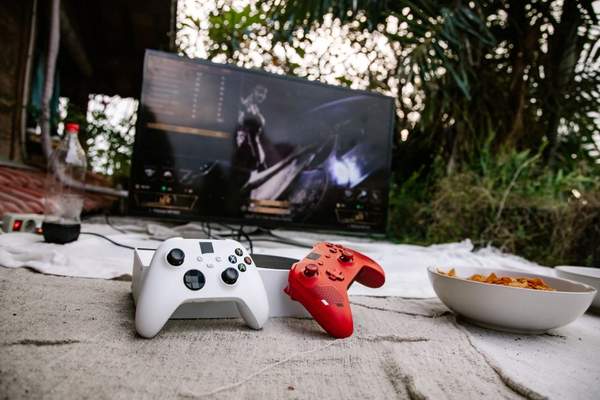
For most gamers, 4K is the more practical target. Modern consoles and gaming PCs support extensive 4K libraries, while native 8K gaming remains limited and technically demanding. Rendering four times the pixels can substantially increase graphics workload, and reaching smooth frame rates often requires compromises or sophisticated upscaling.
Rather than prioritizing 8K, look for a television with low input lag, variable refresh rate, useful HDMI 2.1 capabilities, and dependable 4K high-refresh-rate support. A gaming TV settings guide can help you make more use of those features than resolution alone will.
What Are You Giving Up to Pay for 8K?
In the US, 8K models tend to sit in expensive, limited product ranges. Exact prices change with screen size, retailer, promotions, and availability, so compare current listings rather than assuming a fixed price gap. The more revealing test is what the same budget buys in a 4K television.
Suppose your choice is a large 8K LCD or a similarly priced premium 4K OLED. The OLED might deliver deeper blacks, better viewing angles, and more impactful HDR during every movie night. Or your budget might stretch to a larger, brighter 4K Mini-LED model that fills your field of view more effectively.
Don’t compare resolution labels in isolation. Compare the actual two televisions using the same content, from the distance you’ll sit at home, and check return policies if a showroom demonstration is inconclusive. The right buy is the one that improves your everyday picture, not the spec sheet.
Who Might Actually Benefit From 8K?
An 8K TV can make sense for an enthusiast building a very large, close-viewing display, someone showing genuine 8K photography or demonstration footage, or a professional using a high-density screen for detailed desktop work. In those situations, the additional pixels can have a clear purpose.
Frequently Asked Questions
Is 8K noticeably better than 4K?
With native 8K footage on an exceptionally large screen viewed up close, the extra fine detail can be visible. At normal living room distances, especially with 4K or lower-resolution content, many people will see little or no meaningful difference.
Do Netflix and other streaming services offer 8K movies?
Mainstream subscription streaming libraries are centered on resolutions up to 4K, not widely available native 8K. Some 8K material exists on platforms such as YouTube, but there is no comparable catalog of mainstream 8K films and series.
Does 8K upscaling turn a 4K movie into true 8K?
No. Upscaling fills the screen’s additional pixels using processing and estimation. Results can look pleasingly sharp, but they do not contain the same genuine recorded detail as footage captured and delivered in native 8K.
Should I buy an 8K TV now to keep it longer?
Only if its current performance, price, and specialized use already justify the purchase. For most households, spending on better contrast, brightness, screen size, and gaming features is a safer choice than paying a premium for uncertain future 8K content.
The Bottom Line
The 4K vs 8K decision is less about which number wins and more about what you’ll actually notice. For most US buyers, a strong 4K television offers the better combination of available content, picture quality, features, and price. Consider 8K only when you have a very large screen, close seating, a realistic source of high-resolution material, and the budget to prioritize detail over other improvements.