
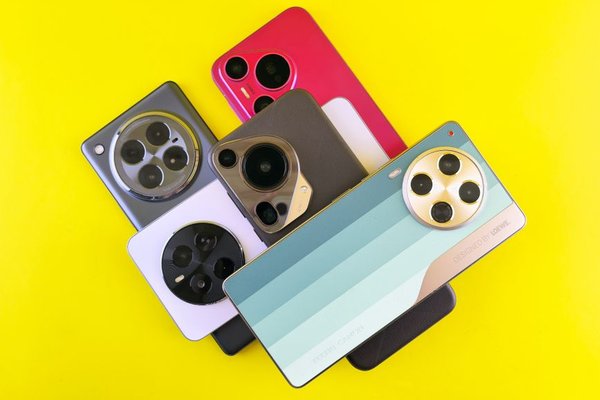
The best camera phones in 2026 are no longer separated by megapixels alone. The real differences show up when the light fades, when a subject is far away, or when you switch from a still photo to video. For photographers, buying a phone is less about chasing the newest launch and more about choosing the camera system that suits the way you actually shoot.
Four flagship families stand out for different reasons: Xiaomi 17 Ultra for hardware-led photography, Samsung Galaxy S26 Ultra for zoom flexibility, iPhone 17 Pro and Pro Max for video and consistent capture, and Google Pixel 10 Pro and Pro XL for computational photography. The best smartphone camera 2026 choice depends on your priorities.
What matters most in a camera phone in 2026?
A top camera phone should be judged as a complete system. The main sensor matters, but so do telephoto reach, ultrawide quality, stabilization, autofocus, processing, RAW support, and video options. A phone that looks excellent at 1x can become much less convincing at 5x or in a dim restaurant.
For phone photography, pay particular attention to focal-length coverage. A strong main camera is ideal for street scenes and everyday photos, while a good telephoto lens is useful for portraits, travel details, wildlife at a distance, and compressed cityscapes. Consistency between lenses matters just as much as headline resolution.
Xiaomi 17 Ultra: best for photography-first hardware
Xiaomi 17 Ultra is one of the most camera-focused phones of 2026. Its 50MP main camera uses a 1-inch sensor with a 23mm-equivalent lens, while the 200MP telephoto uses a large 1/1.4-inch sensor and mechanical optical zoom covering 75mm to 100mm. That continuous telephoto range gives portrait photographers more framing freedom without relying entirely on digital cropping.
The phone also includes a 50MP 14mm ultrawide camera. Xiaomi’s Leica collaboration adds a photography-oriented approach to color and optics, while the 1-inch main sensor is a major advantage when you want strong light gathering and flexible low-light capture.
Choose the Xiaomi 17 Ultra if you care most about still photography and enjoy thinking in focal lengths. It is particularly compelling for travel, night scenes, and portraits.
Samsung Galaxy S26 Ultra: best for flexible zoom
The Galaxy S26 Ultra is a versatile choice for photographers who move between wide scenes and distant subjects. Its rear system combines a 200MP f/1.4 main camera, a 50MP ultrawide, a 50MP 5x telephoto, and a separate 10MP 3x telephoto. That dedicated 3x and 5x coverage is useful for portraits, events, architecture, and travel.
Samsung also offers computational zoom up to 100x. Treat that extreme figure as a convenience feature rather than the same thing as optical zoom. For serious images, the lower zoom ranges will usually be the more dependable choice.
If your ideal camera phone needs to handle a concert stage, a building detail across the street, and a wide landscape on the same day, the S26 Ultra is an excellent fit.
iPhone 17 Pro and Pro Max: best for video and consistency
Apple’s iPhone 17 Pro models use three 48MP rear cameras: main, ultrawide, and telephoto. The telephoto provides a 100mm 4x view and also supports an 8x optical-quality option at 200mm. Apple offers ProRAW for stills and a professional video toolset including 4K Dolby Vision, ProRes, ProRes RAW, Apple Log 2, and external recording options.
That makes the iPhone 17 Pro attractive to creators who switch frequently between photography and video. Its strength is the way capture, stabilization, color workflows, audio, and editing options fit together. For a travel creator filming handheld clips in the morning and shooting portraits in the evening, that predictable workflow can matter more than having the biggest sensor on paper.
Google Pixel 10 Pro and Pro XL: best for computational photography
Google’s Pixel 10 Pro models combine a 50MP main camera, 48MP ultrawide with Macro Focus, and 48MP 5x telephoto. They also provide optical-quality options at several useful steps and computational Pro Zoom up to 100x. The front camera is a 42MP autofocus unit with a wide field of view.
Pixel photography is built around software assistance as much as hardware. Features such as Night Sight, Astrophotography, Action Pan, Long Exposure, Face Unblur, and high-resolution portrait capture can help photographers get a usable result quickly without manually managing every setting.
If you prefer a phone that does more of the decision-making for you while still offering pro controls when needed, the Pixel 10 Pro is one of the easiest recommendations.
How to choose the best camera phone for your photography
Think about the photos you take most often, not the camera features you use once a year. A practical way to decide is to review your last 100 photos. If many are distant subjects, prioritize telephoto quality. If they are mostly family, pets, and indoor scenes, focus on autofocus, motion handling, and low-light performance. If your gallery is full of travel videos, video stabilization and recording formats deserve more weight.
For example, someone photographing children indoors may get more value from fast autofocus and reliable processing than from 100x zoom. A traveler shooting architecture and mountain details may prefer the S26 Ultra or Xiaomi 17 Ultra because their lens choices provide more framing flexibility.
Natural internal topics to explore next include smartphone photography settings, mobile photo editing, and optical versus digital zoom. Each can help you get more from whichever camera phone you choose.
FAQ
Which phone has the best camera in 2026?
There is no single winner for every photographer. Xiaomi 17 Ultra is particularly strong for photography-focused hardware, Galaxy S26 Ultra for zoom versatility, iPhone 17 Pro for video and consistent capture, and Pixel 10 Pro for computational photography and easy point-and-shoot results.
Is a 200MP camera automatically better than a 50MP camera?
No. Resolution is only one part of image quality. Sensor size, lens quality, aperture, autofocus, stabilization, image processing, and lighting can have a larger effect on the final photograph.
Which camera phone is best for zoom photography?
Galaxy S26 Ultra and Xiaomi 17 Ultra are especially compelling for zoom. Samsung offers dedicated 3x and 5x telephoto cameras, while Xiaomi uses a 200MP telephoto with mechanical optical zoom across 75mm to 100mm.
Which camera phone is best for video?
iPhone 17 Pro and Pro Max are strong choices for serious mobile video because they combine stabilized 4K capture with Dolby Vision, ProRes, ProRes RAW, Apple Log 2, and creator-friendly recording workflows.
Final thoughts
The best camera phones 2026 buyers should consider are defined by specialization. Xiaomi 17 Ultra pushes photography hardware, Samsung Galaxy S26 Ultra emphasizes focal-length flexibility, iPhone 17 Pro delivers a polished photo-and-video workflow, and Pixel 10 Pro leans into intelligent processing. Pick the phone that matches the photographs you actually make, and you are far more likely to be happy with it long after launch season has passed.